DECREE ON STRENGTHENING JUDICIAL INDEPENDENCE AND REFORMING THE BODIES OF THE JUDICIAL COMMUNITY

On November 24, 2025, the President of the Republic of Uzbekistan signed a pivotal Decree aimed at fundamentally improving the activities of judicial community bodies, ensuring the independence of the judiciary, and enhancing transparency in the selection and appointment of personnel. This document serves as a significant milestone in implementing the objectives set forth in the «Uzbekistan – 2030» Strategy.
The Decree defines the priorities as strengthening the principle of self-governance within the judicial community, relying on transparent and clear criteria for the formation of the judicial corps, and broadly introducing openness into candidate selection processes. Furthermore, to ensure gender equality within the judicial system, the proportion of women judges is targeted to reach at least 30 percent.
Several key proposals regarding the incorporation of the principle of judicial irremovability into legislation were approved. Specifically:
- Judges shall be appointed first for a 5-year term, and subsequently on an indefinite basis;
- Candidates for leadership and higher judicial positions shall be selected through an open competition among judges;
- Core criteria such as “integrity,” "professional competence," and "adherence to ethical rules" are established at the legislative level.
- Henceforth, the permanent judicial members of the Council shall consist of:
- 2 judges from the Supreme Court,
- 7 judges from regional-level courts,
- 4 judges from district and city courts.
All candidates are recommended by judicial qualification commissions. Non-permanent (public) members of the Council are formed based on recommendations from scientific organizations and civil society institutions.
Starting December 15, 2025, the following will be publicly announced on the Council's official website:
- All vacant positions within the judicial system;
- Procedures for filling these vacancies;
- Every stage of the candidate selection and appointment process.
Moreover, the practice of requiring redundant documents from candidates will be abolished, and the Council’s information system will be fully integrated with inter-agency databases.
In accordance with the Decree:
- Artificial Intelligence will be utilized to evaluate the effectiveness of judges' performance;
- The assessment of candidates' psychological profiles will be conducted via an electronic platform;
- Voting and decision-making processes during Council meetings will be digitalized.
The Council has been allocated 4 additional staff units, bringing the total staff count to 32. The Council, the Supreme Court, and the General Prosecutor's Office will prepare analytical materials to review liability for unjust verdicts and decisions based on international criteria and to establish criminal liability for unlawful interference in the activities of Council members.
At the same time, the right to defense is guaranteed in disciplinary proceedings against judges; clear criteria for disciplinary sanctions are established, and recommendations for higher positions are prohibited while a sanction is in effect.
Under the Decree:
- Separate quotas for women may be established for admission to the Academy of Justice;
- The initiative to establish the Association of Women Judges of Uzbekistan was supported;
- Judges who served as lecturers at the Academy have the right to return to their judicial positions upon completion of their teaching tenure.
This Decree will serve to elevate judicial independence and legal reforms to a new level, increasing the professional and institutional efficiency of the judicial community bodies.
Nizomiddin Ernazarov,
Head of Cabinet,
Academy of Justice of the Republic of Uzbekistan
Boshqa yangiliklar
-
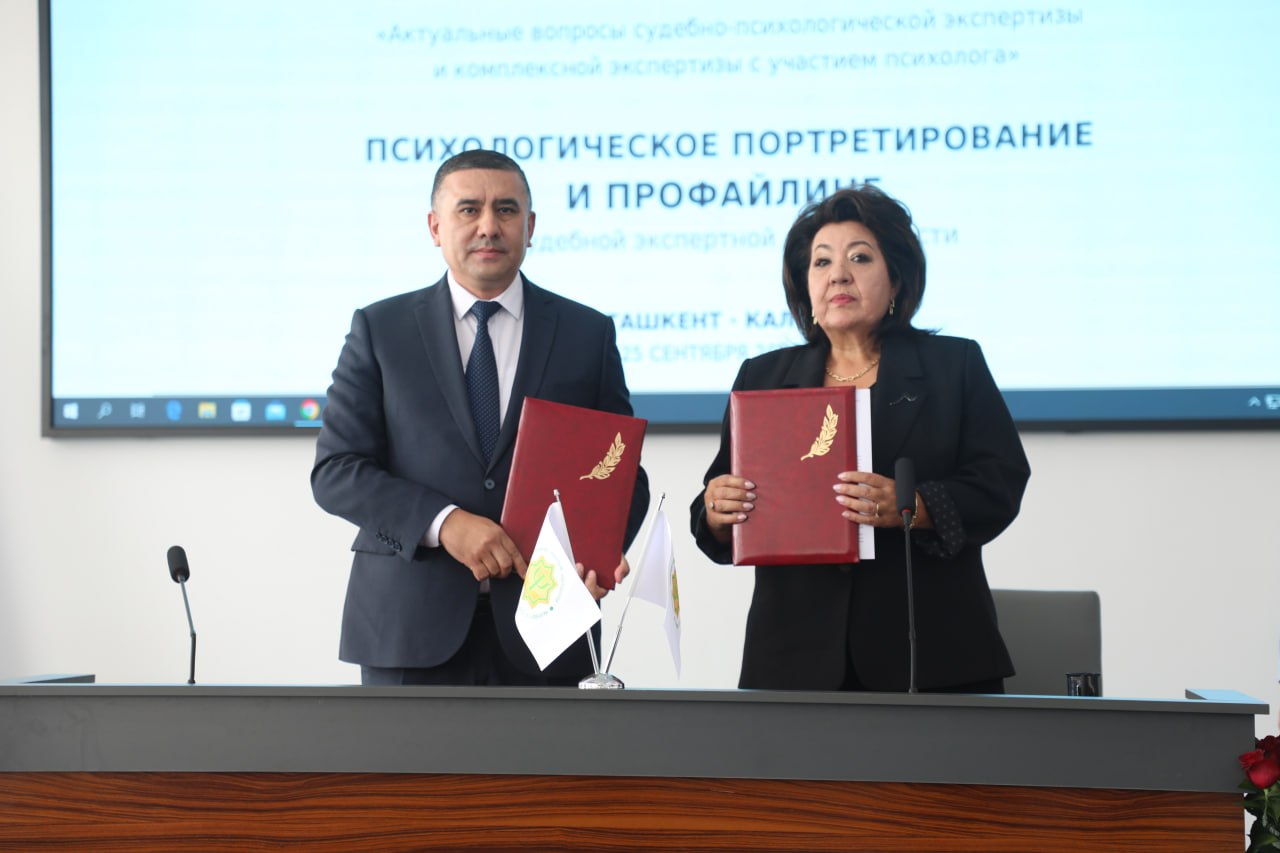
COOPERATION IN THE FIELD OF FORENSIC PSYCHOLOGY IS BEING STRENGTHENED
-
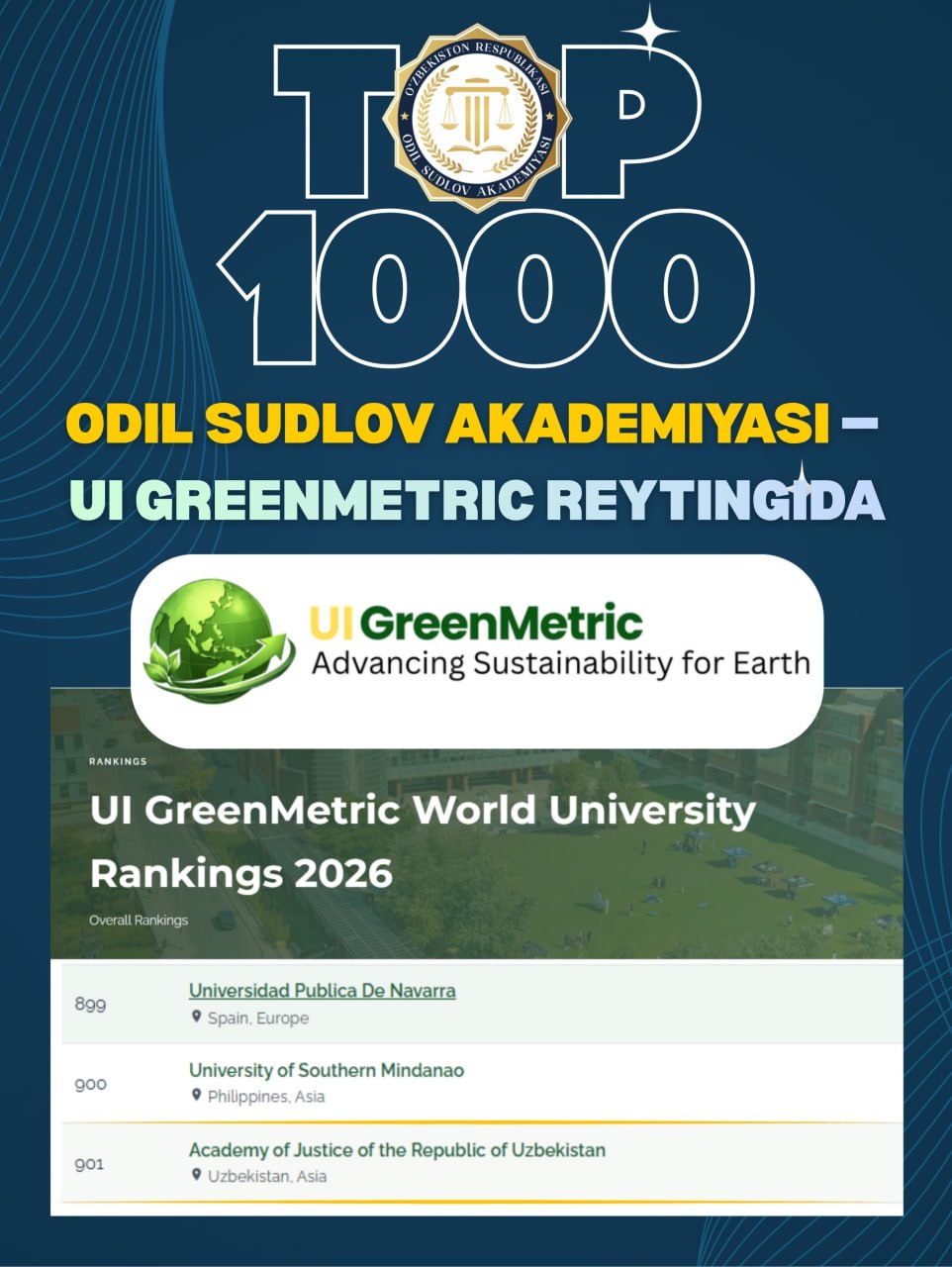
ACADEMY OF JUSTICE — RANKED AMONG THE TOP 1000 IN THE UI GREENMETRIC INTERNATIONAL RANKING
-
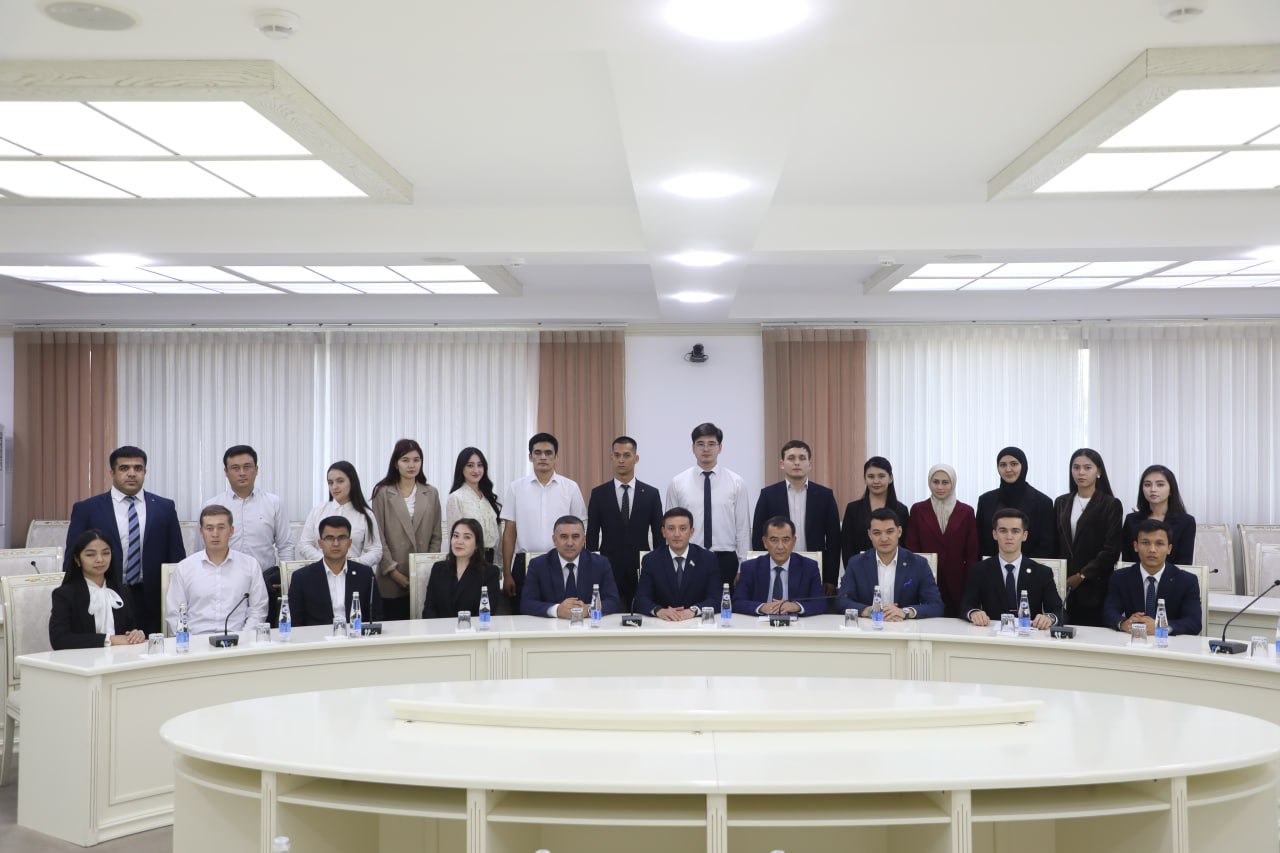
Issues of the Personal Development of the Younger Generation and Fostering a Spirit of Patriotism Discussed
-
Prospects for Mutual Cooperation with the Ambassador of the PRC Discussed
-
“How Will the Tashkent International Financial Centre Change Judicial Practice?”