CREATING A SAFE ENVIRONMENT IN MAHALLAS: A NEW STAGE AND TARGETED APPROACH
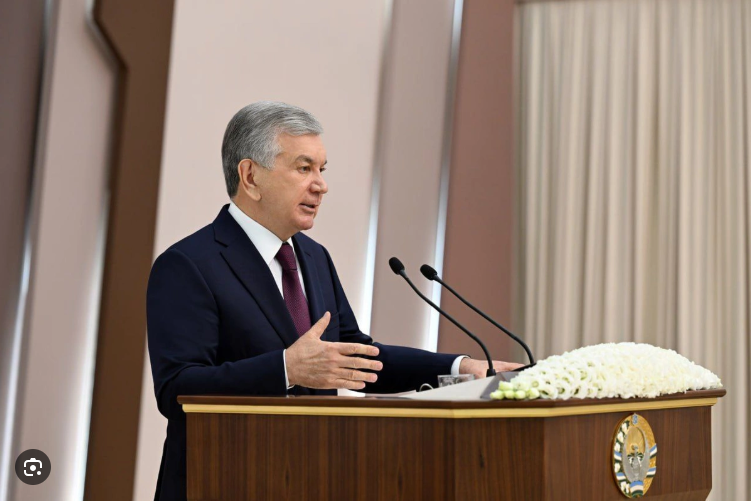
By Presidential Decree dated January 5, 2026, President Shavkat Mirziyoyev of the Republic of Uzbekistan has introduced a completely new — integrated and targeted — system for creating a safe environment in the country’s mahallas. This document continues the reforms launched in 2025 and aims to reduce crime and improve mechanisms for preventing offenses at the local level.
Experience of 2025 — positive outcomes
The decree notes that measures implemented in 2025 led to a nearly 1.5-fold reduction in crime in mahallas. This indicates the correct direction of the social prevention system. The main task now is to consolidate these results and ensure a sustainable system.
Key objectives of the decree
The new decree sets the following priority directions:
Significant crime reduction through targeted prevention
Each mahalla will conduct an in-depth analysis of the criminal situation, identify root causes, and apply individual preventive measures as a priority.
Scientific study of crimes among women and youth
Crimes within family relationships will be examined using the principle “scientific conclusion — recommendation — result,” with practical mechanisms for early prevention developed.
Rapid response and electronic monitoring system
A system for quick response to illegal acts will be established, with broad implementation of modern ICT and artificial intelligence technologies.
Assigning mahallas “by name”
In 2026, mahallas with high criminal risk will be assigned to specific responsible leaders and organizations:
Mahallas in the “red” category — under district and regional leaders;
Areas in critical condition for many years — under law enforcement and scientific institutions;
Areas with high female criminality — under family and women’s affairs, healthcare, and justice agencies.
This approach strengthens personal accountability and the principle “responsible — results.”
“Social Prevention Week” — a new practical mechanism
According to the attached Regulations, “Social Prevention Week” will be regularly held in mahallas. Activities include:
Individual work with social prevention targets;
Job fairs to address unemployment;
Legal advice and mobile receptions;
Targeted work with troubled families;
Promotion of a healthy lifestyle.
“Mahalla yettiligi” forms clear conclusions and directs them for implementation. Week results are widely covered by media and social networks.
Digital systems implementation
The Ministry of Internal Affairs is tasked with:
Accepting citizen requests in real-time via staff tablets;
Developing the “My Inspector” mobile application;
Implementing the “E-Troubled Family” module under the “E-Social Prevention” system;
Expanding the work of mahalla law enforcement units.
This reduces human error, increases transparency, and ensures rapid response.
Rule of law and strict oversight
The decree establishes strict measures against concealment of crimes, misclassification, or failure to record requests. Personal responsibility is assigned to all levels of prosecution and law enforcement heads.
Results are critically reviewed monthly and quarterly, with mechanisms for rewards or disciplinary action applied.
Core principle: “Prosperous and Safe Mahalla”
The decree emphasizes shared responsibility of the mahalla, local government, social services, and community for safety. With PQ-1, creating a safe environment in mahallas has reached a new stage. Prevention is now the main tool, with digital monitoring, personal accountability, and community involvement as key pillars.
Implementation of this decree will ensure sustainable safety, public satisfaction, and strengthen the rule of law in society.
Khamid AKMALOV
Staff Member, Academy of Justice of the Republic of Uzbekistan,
Master’s Degree student, Tashkent State University of Law
Boshqa yangiliklar
-
COOPERATION IN THE FIELD OF FORENSIC PSYCHOLOGY IS BEING STRENGTHENED
-
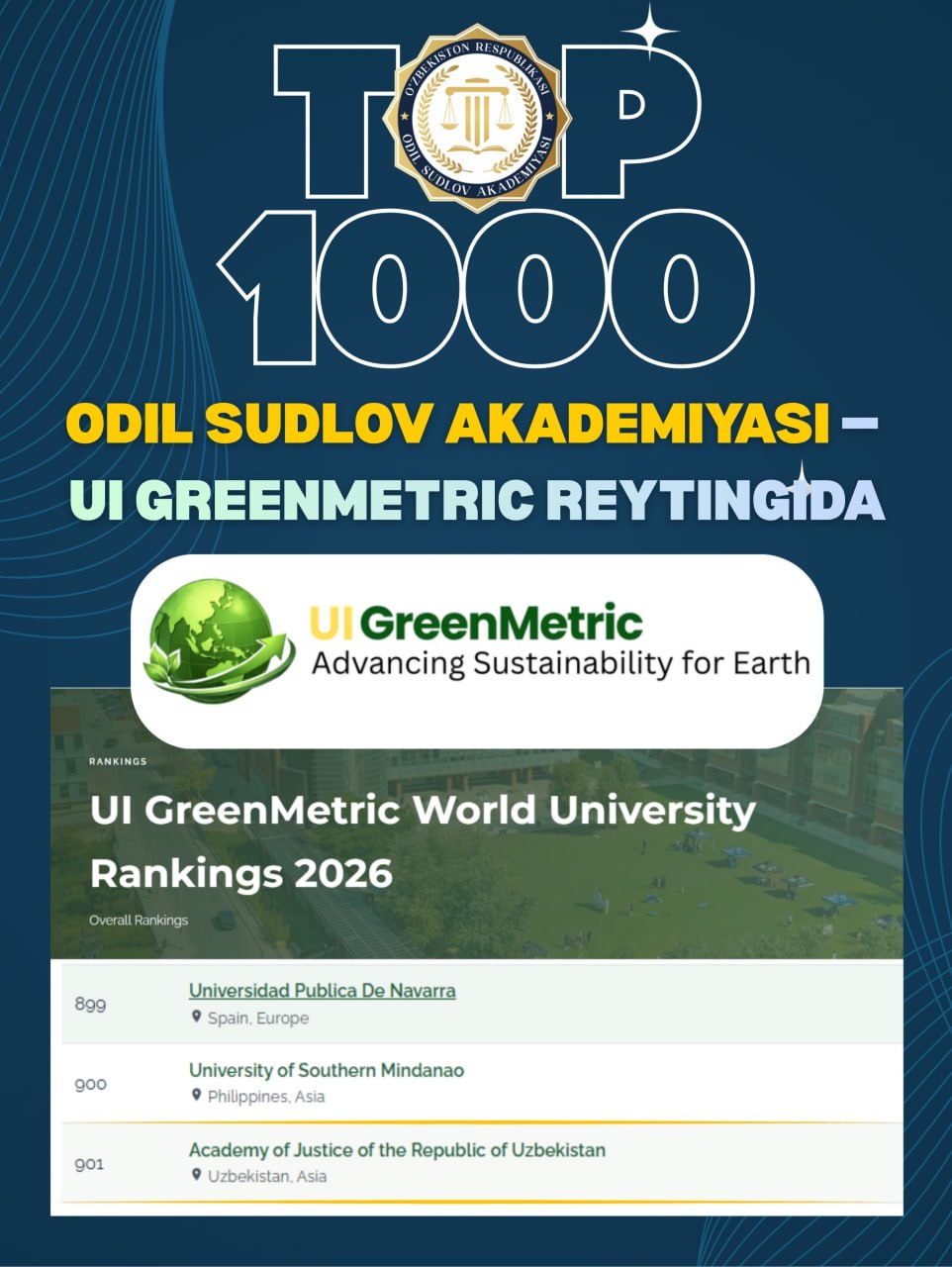
ACADEMY OF JUSTICE — RANKED AMONG THE TOP 1000 IN THE UI GREENMETRIC INTERNATIONAL RANKING
-
Issues of the Personal Development of the Younger Generation and Fostering a Spirit of Patriotism Discussed
-
Prospects for Mutual Cooperation with the Ambassador of the PRC Discussed
-
“How Will the Tashkent International Financial Centre Change Judicial Practice?”