News
COOPERATION IN THE FIELD OF FORENSIC PSYCHOLOGY IS BEING STRENGTHENED
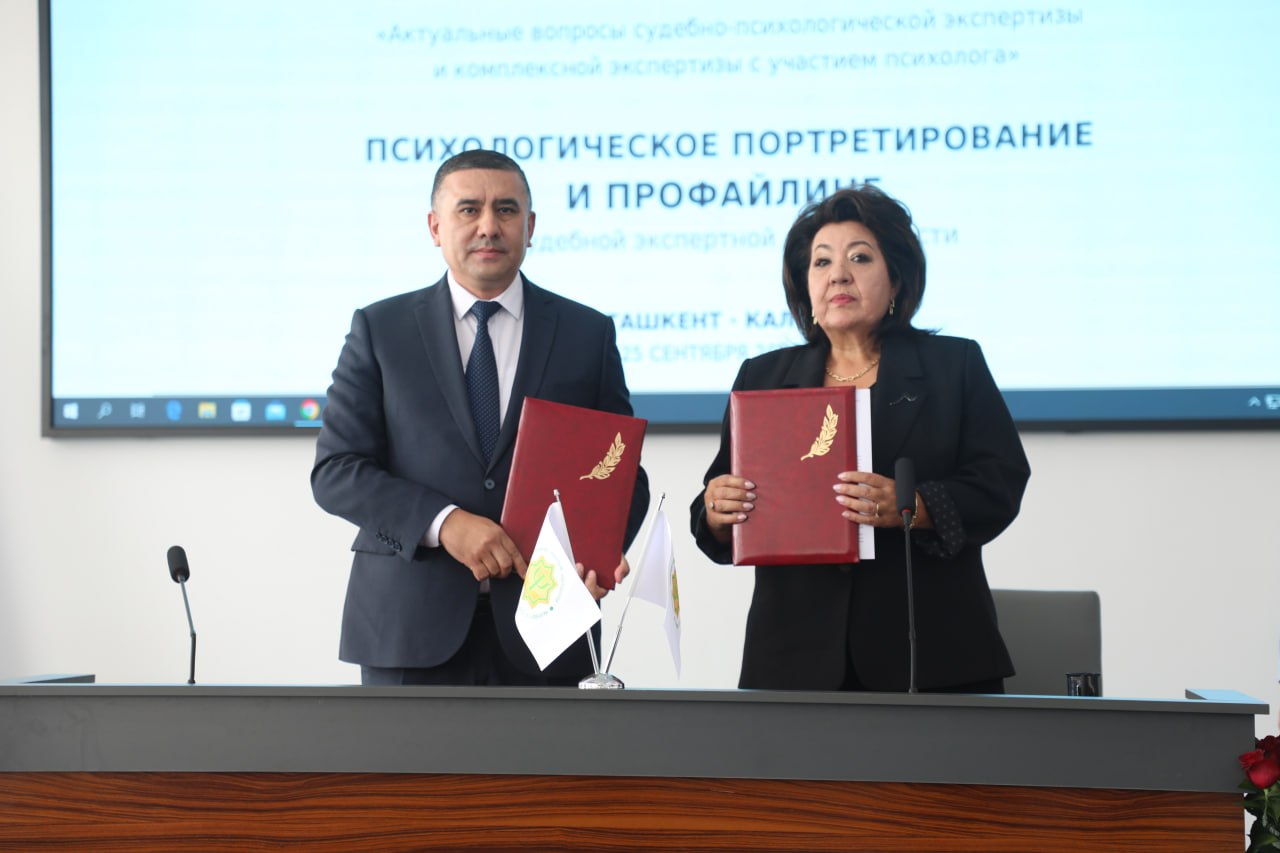
A Memorandum of Cooperation has been signed between the Academy of Justice of the Republic of Uzbekistan and the Association of Psychologists of Uzbekistan.
📢 Today, the 5th International Scientific and Practical Conference “Current Issues of Forensic Psychological Examination and Comprehensive Examination Involving a Psychologist” was held in Tashkent on the topic “Psychological Profiling and Profiling in Forensic Expert Activities.”
🤩 The conference brought together specialists and international experts from Uzbekistan, Russia, Belarus, Armenia, Canada, and Switzerland.
🤝 As part of the conference, a Memorandum of Cooperation was signed between the Academy of Justice of the Republic of Uzbekistan and the Association of Psychologists of Uzbekistan.
📄 The Memorandum provides for cooperation in such areas as the training, retraining, and professional development of personnel for the judicial and legal sector, the development of psychological competencies among judges and judicial system employees, as well as expanding the use of modern psychological approaches in judicial activities.
The parties will also cooperate in the areas of forensic psychology, psychological profiling and profiling, cases involving minors, the application of psychological knowledge in forensic expert activities, scientific research, exchange of experience, organization of seminars and training sessions, and professional development of specialists.
🔹 The Memorandum represents an important step toward enhancing the psychological and professional competencies of judicial personnel, developing modern psychological approaches in forensic expert activities, and expanding practical and scientific cooperation in the field of forensic psychology.
Read More
ACADEMY OF JUSTICE — RANKED AMONG THE TOP 1000 IN THE UI GREENMETRIC INTERNATIONAL RANKING
The Academy of Justice of the Republic of Uzbekistan has achieved an important result at the international level.
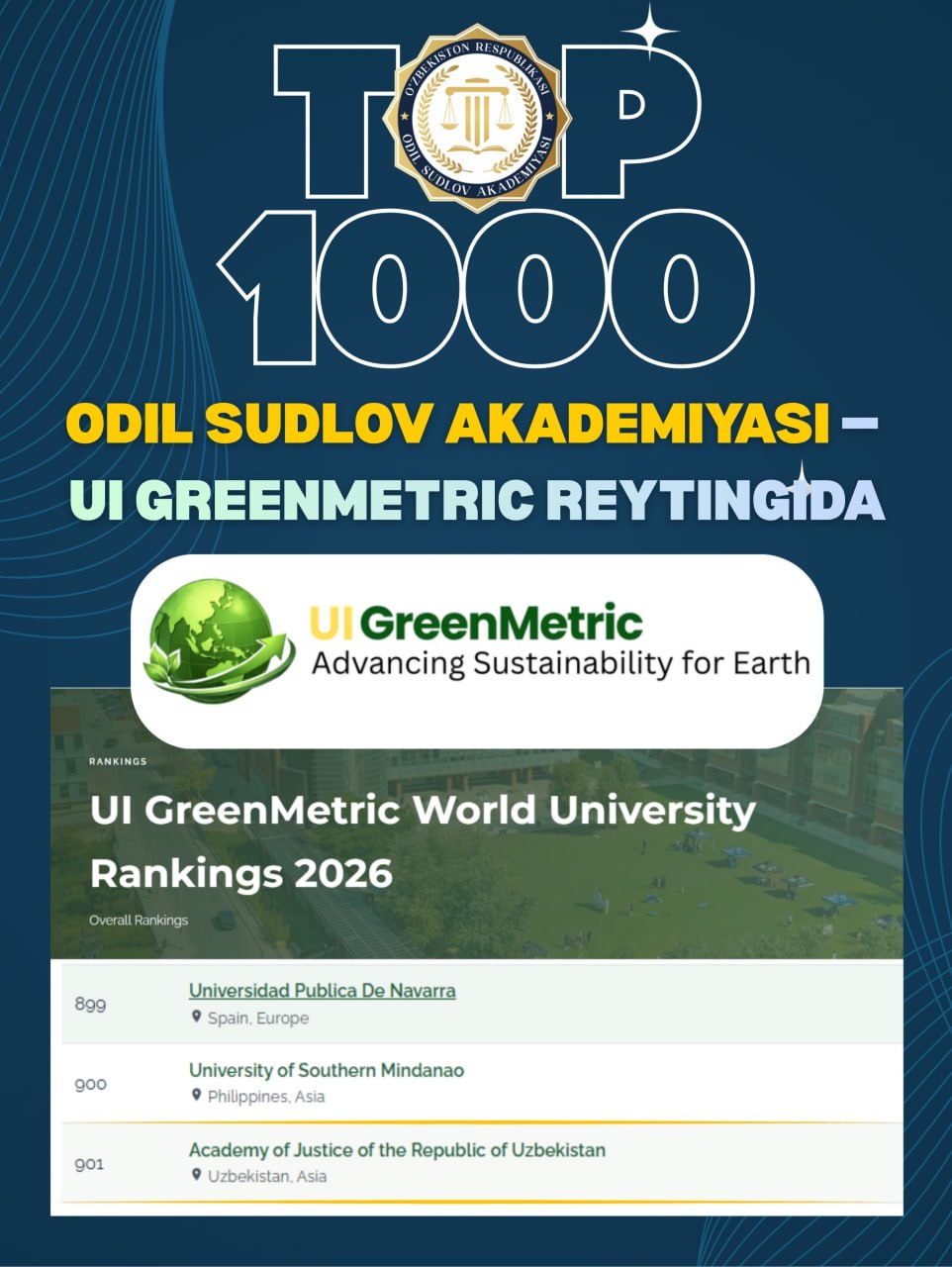
🔝 In the UI GreenMetric World University Rankings 2026, the Academy ranked 901st among more than 2,000 higher education institutions from 110 countries, placing it in the TOP 1000.
🔼 This result demonstrates that the Academy’s activities in areas such as sustainable development, a modern educational environment, and environmental responsibility have been assessed in accordance with the criteria of the international ranking.
Most importantly, the Academy’s inclusion in this prestigious international ranking is an important result reflecting its growing position and recognition in the international higher education community.
Read More
Issues of the Personal Development of the Younger Generation and Fostering a Spirit of Patriotism Discussed
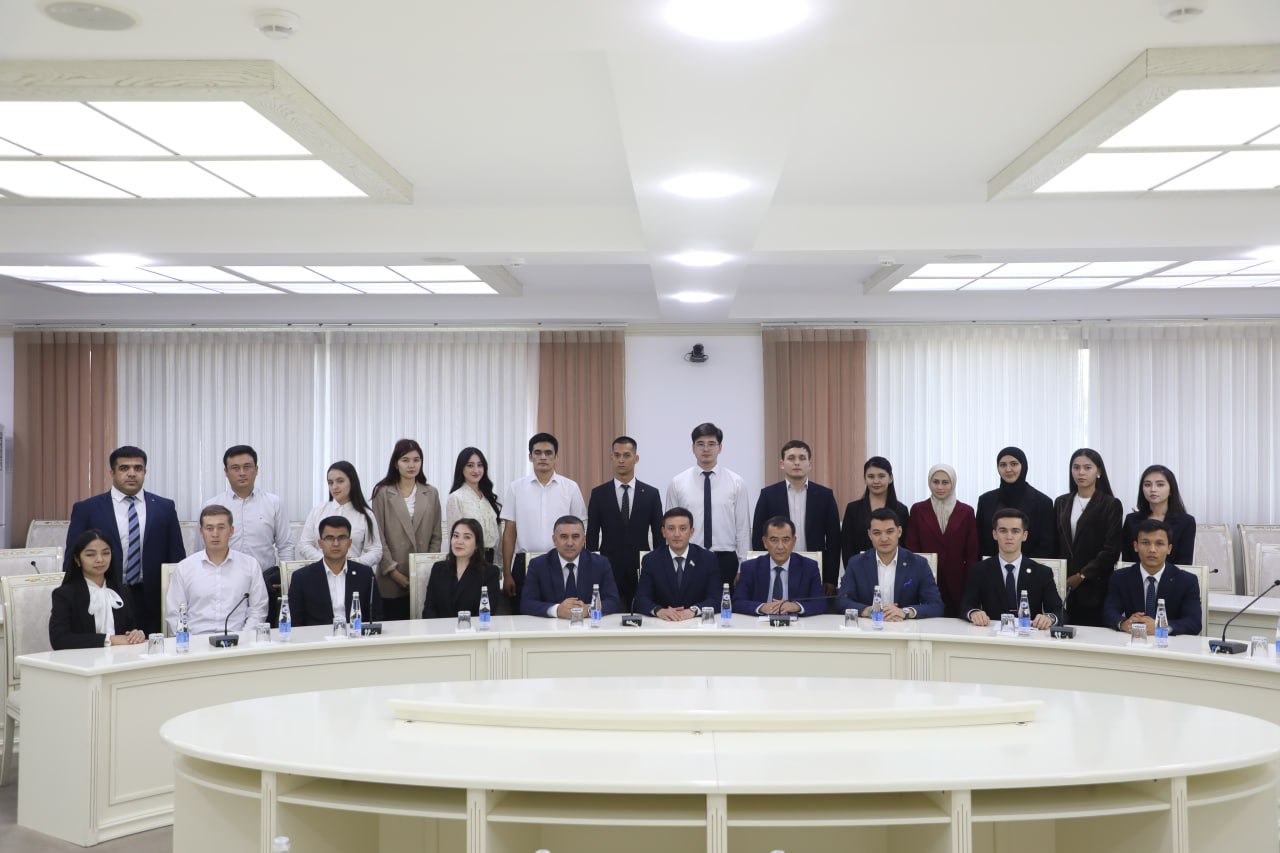
Today, the Academy of Justice of the Republic of Uzbekistan hosted a spiritual and educational dialogue dedicated to the personal and spiritual development of young people, fostering independent thinking and a sense of responsibility, and strengthening their commitment to their Motherland.
🎙 Bobur Bekmurodov, Chairman of the “Yuksalish” Movement, took part in the event and delivered a presentation on the personal development of young people, spiritual resilience, responsibility, and the formation of life goals.
During the event, participants exchanged views on the topic and received answers to their questions.
Read More

“How Will the Tashkent International Financial Centre Change Judicial Practice?”
UzA has published an interview with Saida Mahmudova, a lecturer at the Department of Economic and Legal Disciplines of the Academy of Justice, on the impact of the Constitutional Law “On the Tashkent International Financial Centre” on Uzbekistan’s legal system and judicial practice.
The interview discusses the legal status of the Tashkent International Financial Centre, the jurisdiction of the Tashkent International Commercial Court, specific aspects of resolving commercial disputes, the relationship between courts and arbitration, interim measures, enforcement of court decisions, and issues concerning applicable law.
Particular attention is also paid to the new knowledge and skills required by judges and legal professionals in the context of the development of international commercial adjudication, including international commercial law, financial instruments, corporate governance, digital assets, and electronic evidence.
📌 The interview also addresses new legal and practical mechanisms related to the national system of commercial adjudication within the framework of the activities of the Tashkent International Financial Centre.
Read more
Read More
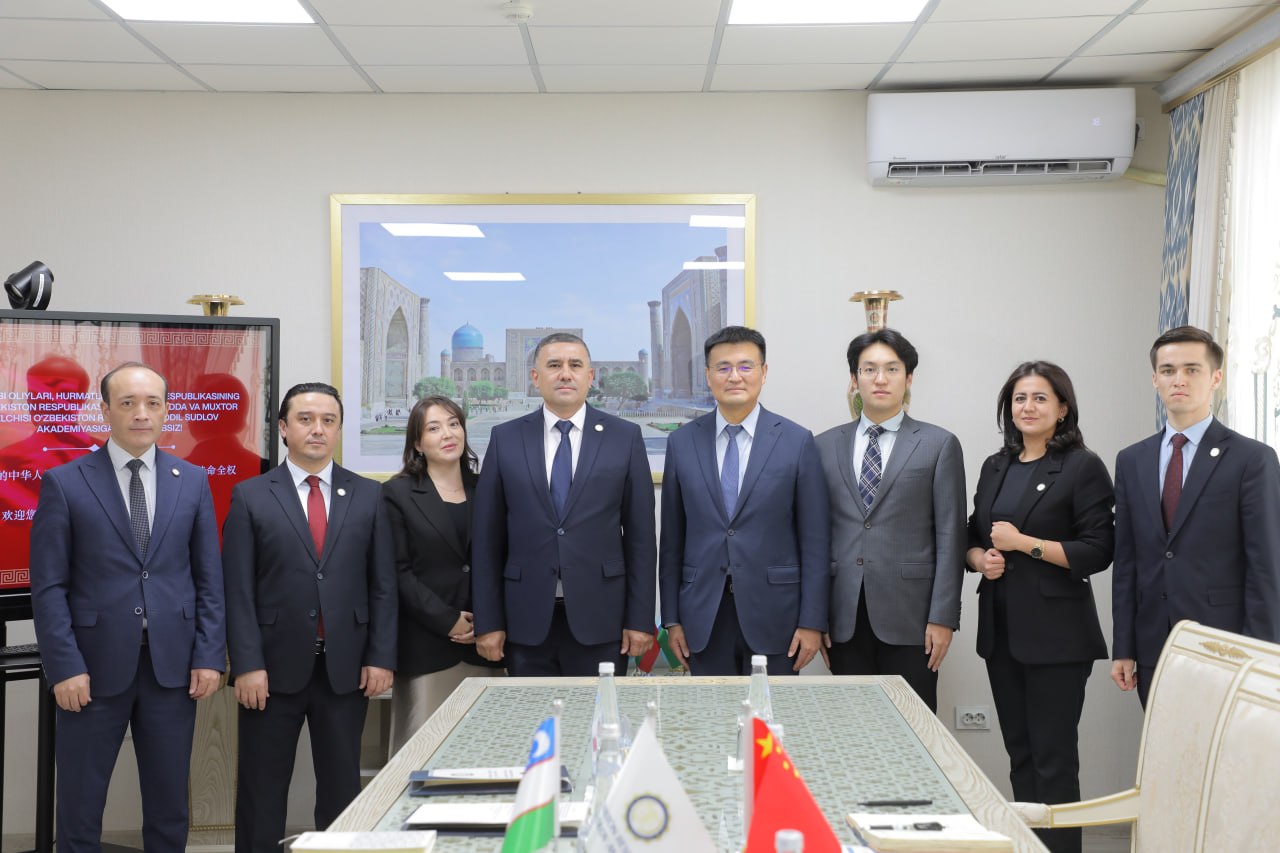
Prospects for Mutual Cooperation with the Ambassador of the PRC Discussed
The Ambassador Extraordinary and Plenipotentiary of the People’s Republic of China to the Republic of Uzbekistan Visited the Academy of Justice
As part of the visit, Ambassador Yu Xun met with the Rector of the Academy, Sherzod Abduqodirov, and exchanged views on further developing bilateral cooperation.
The meeting addressed legal education, professional development and exchange of experience, establishing mutual cooperation, and implementing joint projects in the future.
During the visit, a tour of the Academy was also organized for the guests.
The parties emphasized the importance of studying advanced practices in the legal field and expanding mutually beneficial cooperation.
At the conclusion of the meeting, the parties agreed to continue their cooperation consistently and implement joint projects in the future.
Read More
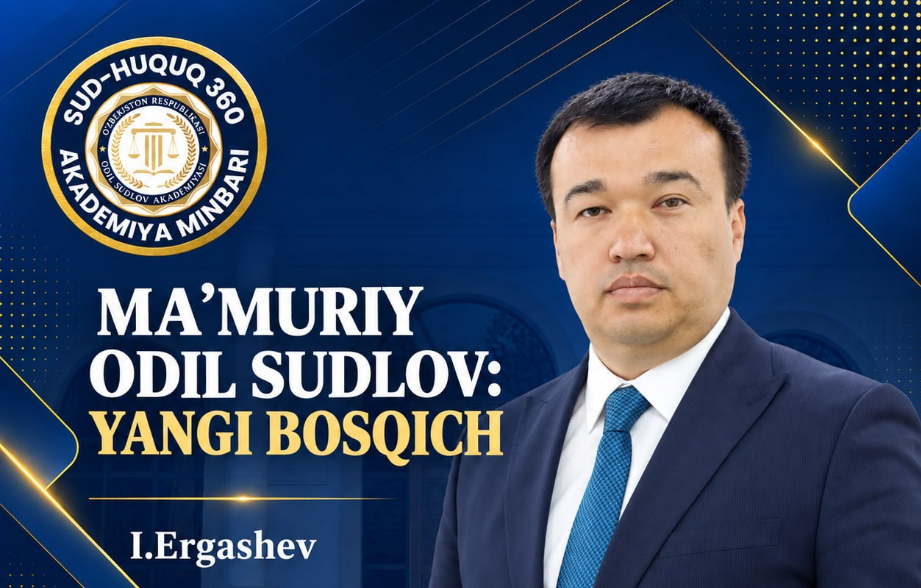
ADMINISTRATIVE JUSTICE: A NEW STAGE
In administrative justice, the focus is not only on restoring violated rights, but also on preventing rights violations and ensuring effective judicial control over decisions of government authorities.
Proposals for taking administrative justice to a new stage have been presented to the Head of State.
📊 What do the figures show?
Since 2017, administrative courts have considered nearly 150,000 cases. In more than 70,000 cases, unlawful decisions of government authorities were annulled. In addition, nearly 27,000 private rulings were issued concerning unlawful actions of officials.
✔️ What is being proposed at the new stage?
introducing four types of claims for applying to court;
ensuring proactive judicial protection aimed at protecting rights before they are violated;
creating the possibility of filing an application without a time limit to establish that a government authority has violated the law;
granting the right to apply directly to an administrative court to challenge regulatory legal acts of local government authorities;
enabling courts to review the legality and reasonableness of the exercise of discretionary powers by government authorities;
strengthening mechanisms to ensure the unconditional enforcement of court decisions.
💡 An important aspect:
This approach envisages further developing administrative courts not merely as institutions that remedy the consequences of rights violations that have already occurred, but as a mechanism for exercising effective judicial control over the activities of government authorities and helping prevent violations of rights.
🖥 A new issue for legal professionals:
In administrative proceedings, it will now be important to consider not only the question “Is the decision lawful?”, but also “On what grounds and through what procedure did the government authority make this decision?”
✍️ I. Ergashev, Head of the Department of Administrative and Legal Disciplines
Read More
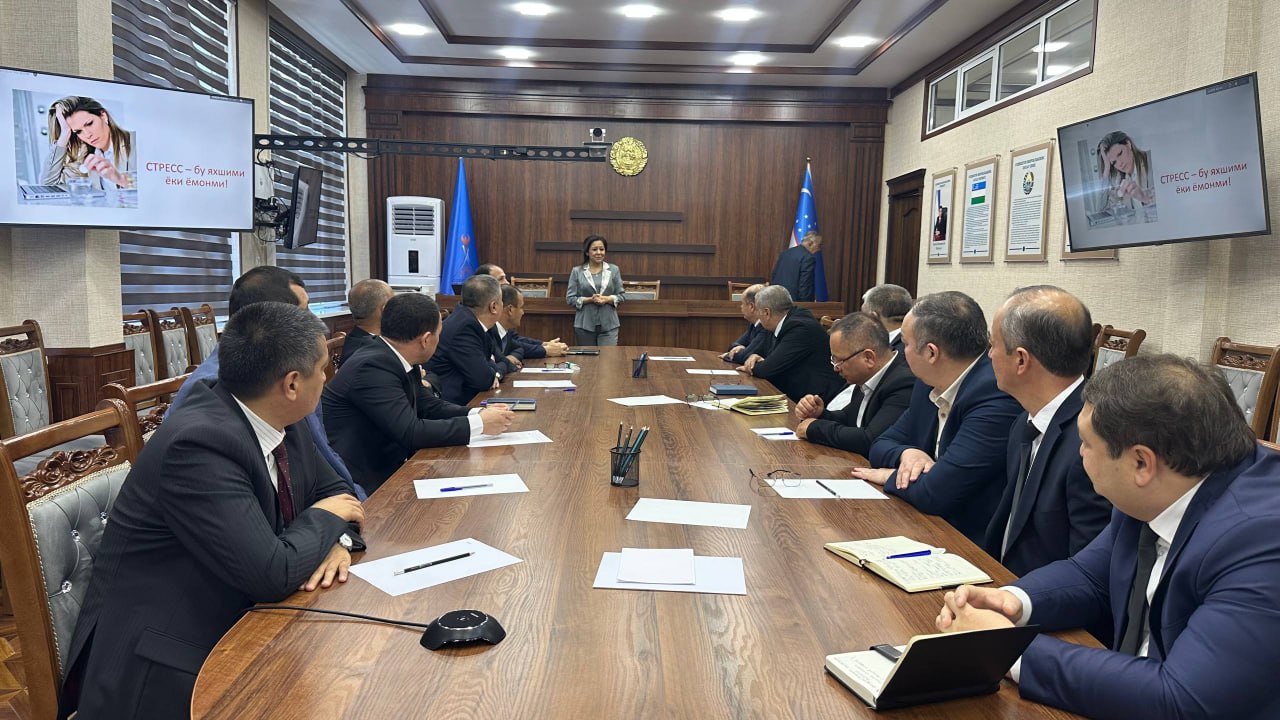
Judges’ Psychological Resilience — An Important Factor in Ensuring Justice
A seminar-training session was held for judges of the Syrdarya Region, aimed at strengthening judges’ psychological resilience, enabling them to make sound decisions in stressful situations, and maintaining emotional stability in their professional activities.
During the session, particular attention was paid to developing skills for effectively managing stressful situations that may arise in judges’ professional activities, maintaining psychological resilience, and making sound decisions in challenging circumstances.
Read More
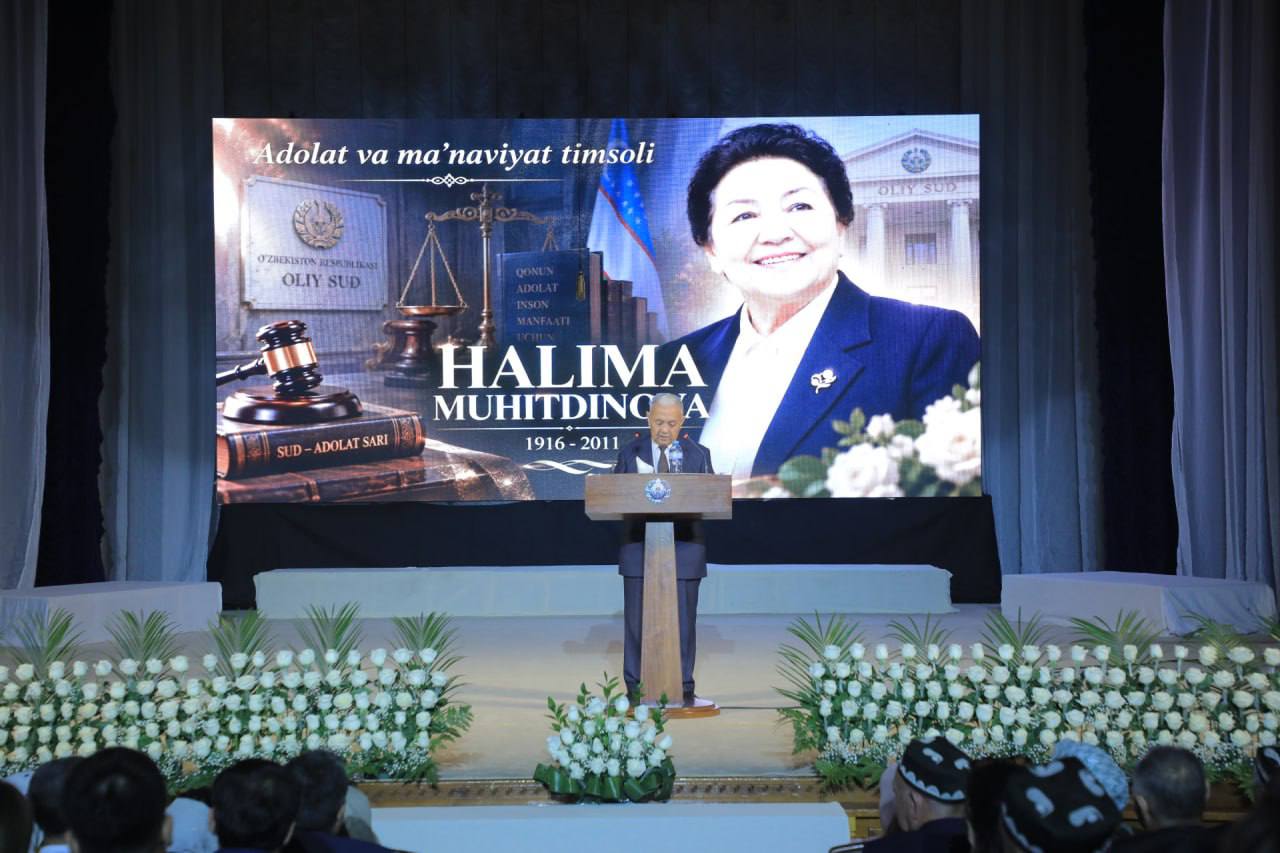
People who have devoted their lives to serving their country and people always deserve honour and respect
People who devote their lives to serving their country and people always deserve honour and respect. In this regard, Halima Muhitdinova, who was born in Uychi District of Namangan Region, was one of those dedicated individuals who worked fruitfully in the judicial and legal system for many years and devoted her life to serving the people. To perpetuate the memory of this distinguished mentor and present her exemplary life as a model for young people, a ceremonial event dedicated to the 110th anniversary of the birth of Halima Muhitdinova was held in the city of Namangan.
The commemorative event was attended by representatives of the Presidential Administration, the Supreme Council of Judges, the Constitutional Court, the Supreme Court, the Association of Judges, and the Ministry of Justice, as well as veterans of the judicial system who came from different regions. At the beginning of the event, a ceremony dedicated to the life and achievements of this dedicated representative of the judicial and legal system was held at the Halima Muhitdinova Academic Lyceum under Tashkent State University of Law.
To perpetuate her memory, a bust of Halima Muhitdinova was installed at the educational institution and a memorial museum was established. At the beginning of the ceremony, the guests unveiled the bust of H. Muhitdinova and laid flowers at its foot. The participants then visited the memorial museum, where they viewed exhibits and personal working items related to Halima Muhitdinova’s life and professional career.
— I am happy to be studying at the Halima Muhitdinova Academic Lyceum, — says Munzira Rahmatullayeva, a first-year student at the institution. — Of course, in the future I want to graduate from this institution and become a dedicated lawyer like Halima Muhitdinova.
The commemorative event then continued at the Namangan Regional Musical Drama Theatre. Veterans of the judicial system and other guests who spoke at the event highlighted Halima Muhitdinova’s professional career, her contributions, courage, and dedication.
During the event, a presentation was held of the book “Matonat Malikasi” (“Queen of Perseverance”) and a documentary film of the same name, both dedicated to the life and career of Halima Muhitdinova. In particular, the theatrical composition staged in honour of this dedicated representative of the judicial and legal system was warmly received by the audience.
— Today, seeing the good deeds carried out to perpetuate the memory of our sister Halima Muhitdinova brought tears to our eyes, — says Sanobar Soliyeva, H. Muhitdinova’s niece. — Indeed, Halima opa remained devoted to her profession in every situation and always placed the interests of the people first. We are proud to be the nieces and nephews of such a remarkable woman.
During the ceremony, the premiere of the song “The Sun of Justice”, dedicated to the life and career of Halima Muhitdinova, also took place. It was also noted that writers had created the epic poem “The Happiness of Life” and the drama “The Eternal Song of Love”, which were published in newspapers. Creative figures who made a significant contribution to these initiatives were presented with letters of appreciation and commemorative gifts from the Governor of Namangan Region.
— Through today’s documentary film and theatrical composition, we witnessed the work carried out by our mentor and lawyer Halima Muhitdinova as Chairperson of the Supreme Court, as well as her dedication and efforts towards the development of the judicial system, — says Nargiza Ahadova, a judge of the Namangan Regional Court.
Certainly, events of this kind play an important role in perpetuating the memory of dedicated people such as Halima Muhitdinova and in presenting their life journeys as an example for younger
Read More
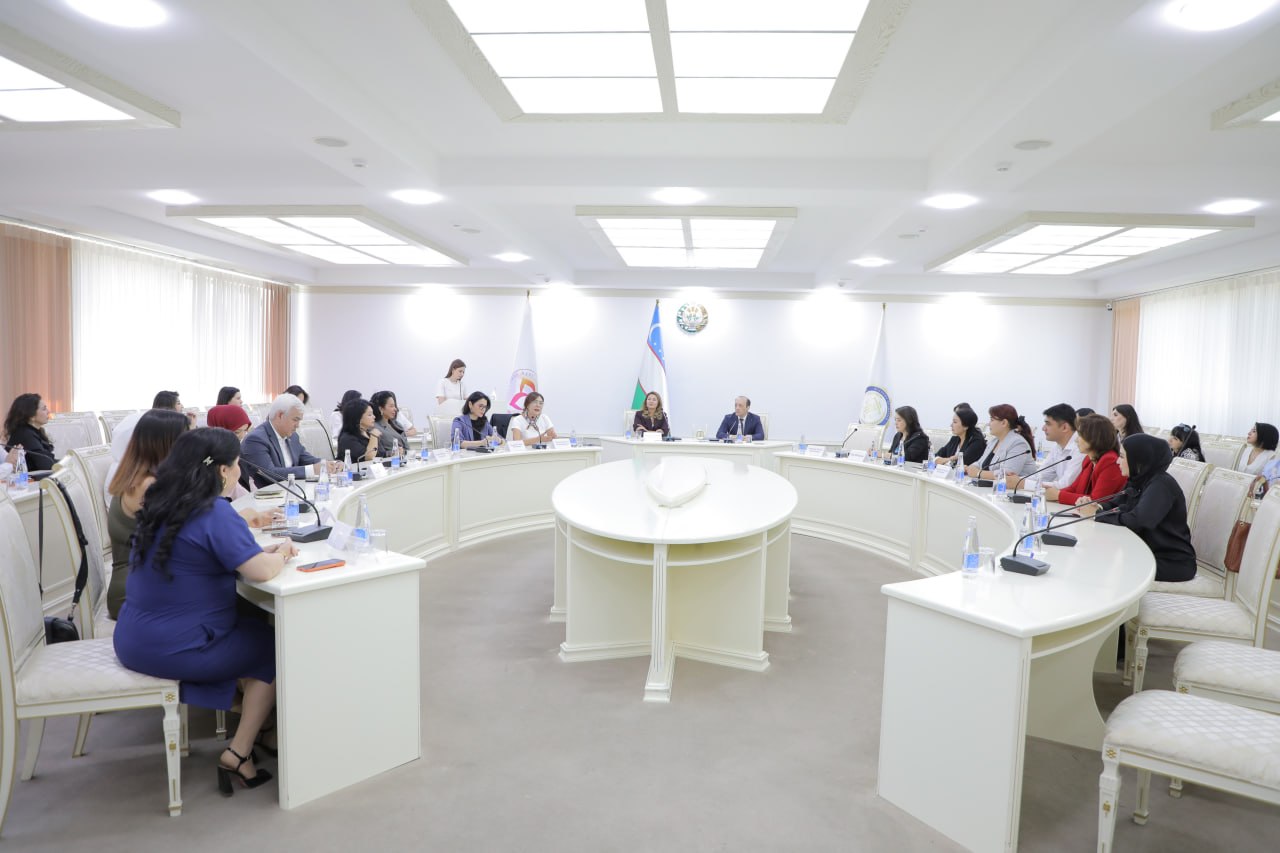
“WOMEN ENTREPRENEURS AND THE STATE: OPEN DIALOGUE AND NEW OPPORTUNITIES”
The Academy of Justice of the Republic of Uzbekistan, in cooperation with the International Association of Businesswomen in Tashkent (ADJ), held a briefing on the topic “Women Entrepreneurs and the State: Open Dialogue and New Opportunities.”
The briefing addressed issues related to developing cooperation between women entrepreneurs and government authorities, supporting women’s entrepreneurship, enhancing their legal and professional capacity, as well as current issues in the sector.
The event was attended by representatives of government authorities and organizations, women entrepreneurs, experts, and members of the public.
At the conclusion of the briefing, proposals were put forward aimed at developing women’s entrepreneurship and expanding practical cooperation.
Read More