
Bo'limlar
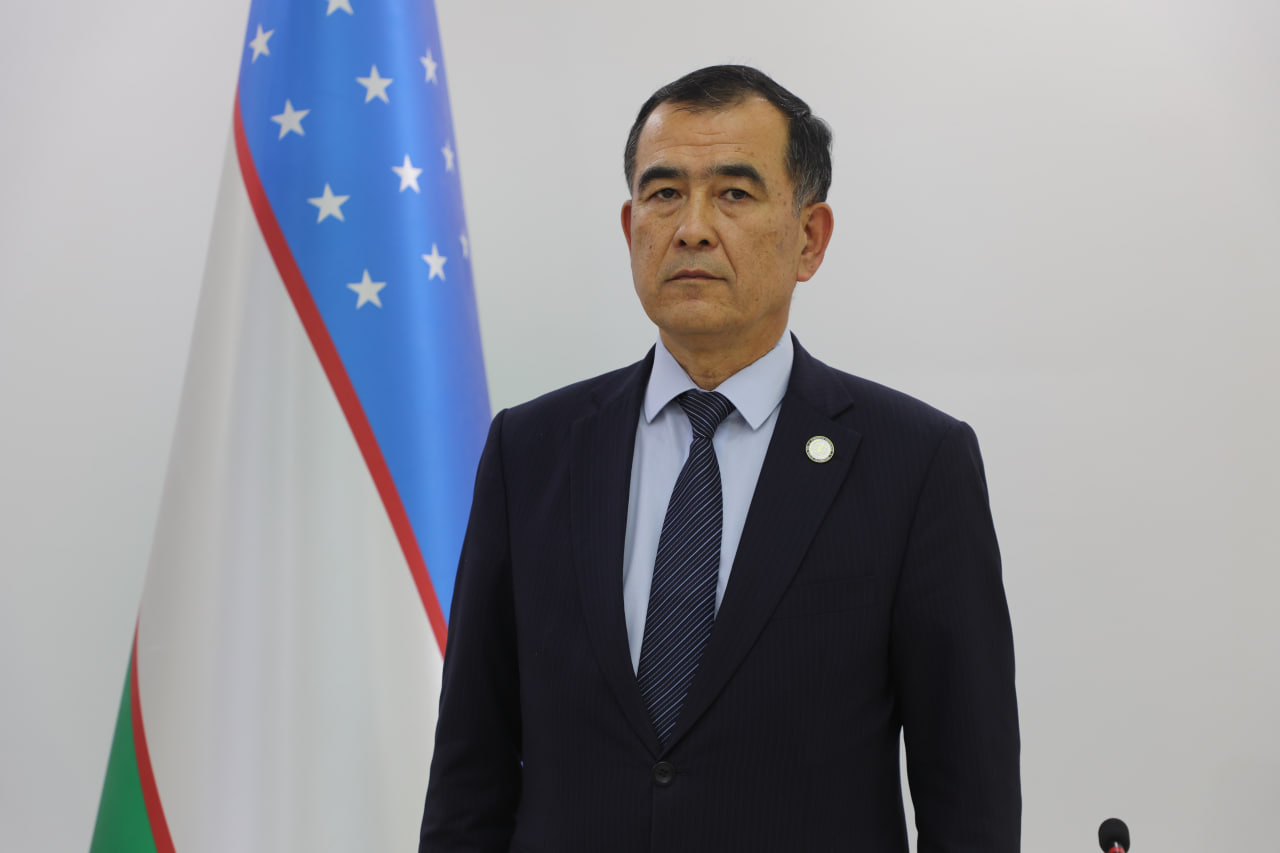
Khudoykul Tojievich Azizov
Dean
Structural division: Faculty of Professional Development and Retraining
Academic degree: PhD in Law, Professor
Phone: (55) 501-01-88
Email: x.azizov@sudacademy.uz
About the Faculty:
Pursuant to Decree No. PF-141 of the President of the Republic of Uzbekistan dated 21 August 2025, “On Measures for the Radical Improvement of the System for Training Highly Qualified Personnel in the Field of Justice”, the Faculty of Advanced Training and Retraining was established at the Academy of Justice of the Republic of Uzbekistan. In accordance with the Academy’s staffing table, the faculty’s structure consists of a dean and a secretary-clerk, with the faculty headed by a dean appointed by the rector of the Academy.
Official name of the faculty:
in the state language – Малака ошириш ва қайта тайёрлаш факультети;
in English – Faculty of Advanced Training and Retraining;
in Russian – Факультет повышения квалификации и переподготовки.
Purpose of the Faculty – the professional retraining of qualified personnel for the judicial system and the improvement of their qualifications, the development of strategic thinking capacity among leaders, judges, and court staff working within the system, and shaping them into mature specialists equipped with skills in modern management technologies, methods of policy analysis, innovative approaches, and effective decision-making. Based on retraining and professional-development educational programs, the faculty carries out educational and practice-simulation activities aimed at enhancing the professional competence of judges and court staff, and serves to provide qualified professional retraining and skills enhancement for judges and court staff in order to ensure effective justice amid the ongoing reforms in the judicial and legal sphere of the Republic of Uzbekistan.
Main tasks and functions of the faculty: In its activities, the faculty, proceeding from the priority directions of state policy, supports the spiritual, intellectual, physical, and moral development of trainees, and strengthens in them respect for national values, patriotism, civic consciousness, tolerance, and respect for laws and national and universal human values.
It organizes the educational process on the basis of modern and innovative teaching methods that meet the high requirements of democratic and legal reform development and modern international standards, and carries out the relevant work on retraining and improving the qualifications of highly skilled judges and court staff.
It organizes professional retraining courses in a dual-education format based on the “theory–practice-simulation” principle, ensuring an inseparable link between trainees’ legislative-application skills and practice, broadly engages trainees in research work, and actively participates in strengthening the scientific potential of the departments.
In addition, it engages in training scientific-pedagogical personnel that meet modern international standards, submits proposals for strengthening the faculty with specialists possessing high professional-pedagogical skill, legal culture, and practical work experience, and for organizing their internships, evaluates and analyzes the quality of education, and effectively organizes other organizational and methodological measures.
The faculty builds a reserve of judges and court staff for the judicial system, trains prospective leaders, and ensures the continuous improvement of their qualifications, and applies advanced foreign experience in the judicial and legal sphere to national practice by developing cooperation with international organizations, educational and research institutions, and research centers.
Furthermore, the Faculty establishes cooperation with local and international educational and research institutions, government bodies, and civil society institutions, carries out experience exchange and joint projects, regularly monitors trainees’ knowledge and skills.
Evaluates the effectiveness of the educational process and submits proposals for its improvement to the leadership, and monitors the professional growth of graduates while establishing connections among them.