Bo'limlar
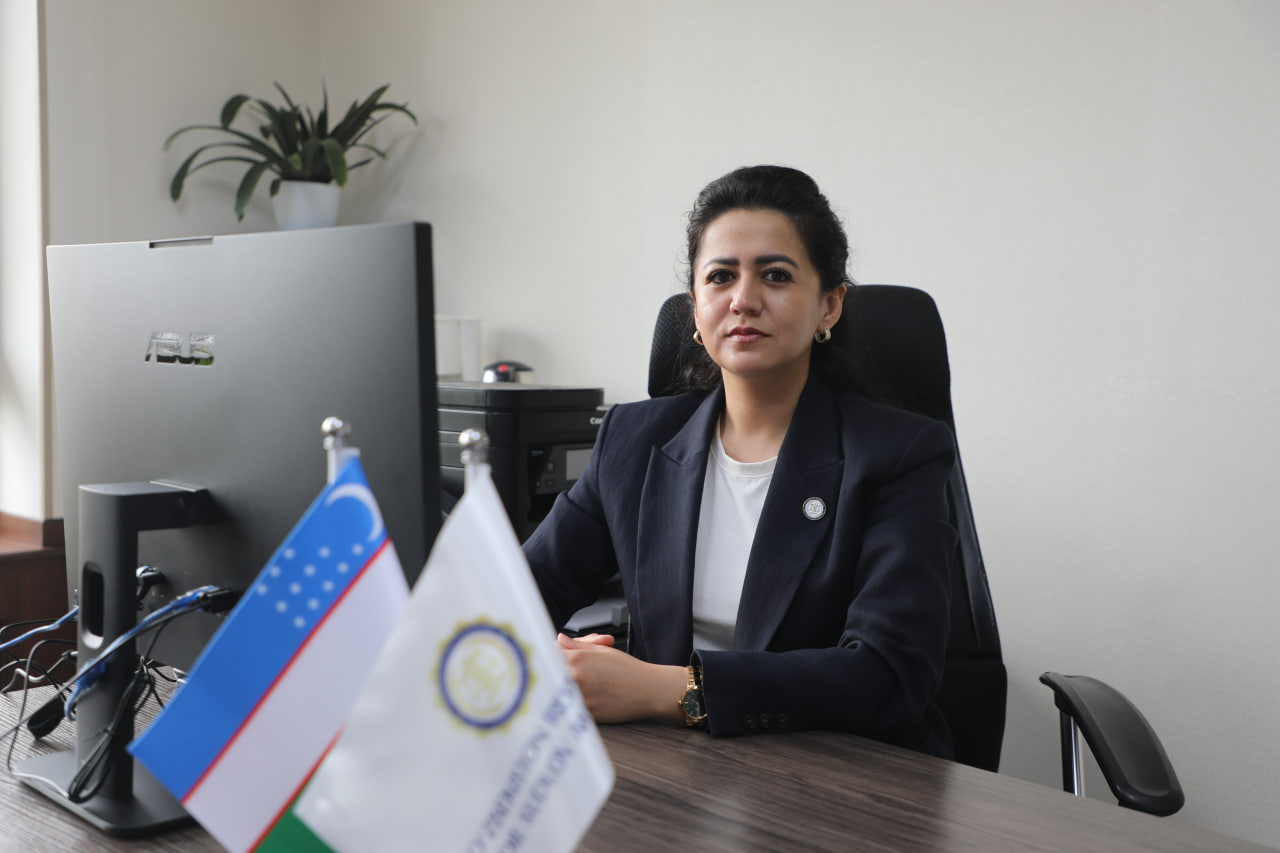
Kayumova Farangiz Uktamovna
Chief Specialist
Structural division: International cooperation department
Academic degree: -
Phone: (55) 501-01-88
Email: f.kayumova@sudacademy.uz
Department of International Cooperation of the Academy of Justice of the Republic of Uzbekistan
Main Purpose and Objectives
The Department of International Cooperation is a structural unit of the Academy responsible for developing the Academy’s international relations, studying and introducing advanced foreign experience in the judicial and legal sphere into practice, as well as establishing and developing international cooperation aimed at enhancing the professional capacity of judges, judicial candidates, academic and teaching staff, and court staff.
Main Tasks of the Department
• developing cooperation with foreign judicial academies, educational and research institutions;
• establishing effective cooperation with international organizations;
• concluding international memoranda and agreements;
• organizing international conferences, forums, seminars, trainings and round tables;
• engaging foreign experts and specialists in the educational process of the Academy;
• organizing the participation of Academy staff, academic and teaching personnel, and trainees in foreign internships and professional development programmes;
• attracting international grants and projects;
• studying advanced experience of foreign countries in the judicial and legal sphere;
• implementing joint research and educational projects;
• enhancing the international reputation of the Academy and expanding the geographical scope of its international relations.
Stages of Development and Priority Areas
The international cooperation activities of the Academy entered a new stage within the framework of the implementation of Presidential Decree No. PF–141 of 21 August 2025 “On Measures to Fundamentally Improve the System of Training Highly Qualified Personnel in the Field of Justice.”
In 2025 and during January–June 2026, the geographical scope of international cooperation was significantly expanded. In particular, cooperation relations were developed with judicial academies, higher education institutions and research centres of Türkiye, Japan, Kazakhstan, Kyrgyzstan, Azerbaijan, Germany, Poland, France, Spain, Lithuania, Serbia, Croatia, Hungary, Malta and the Russian Federation.
Cooperation was also established with such international organizations as UNESCO, OSCE, UNICEF, JICA, TİKA, the International Commission of Jurists (ICJ), IRZ and the Turkic Judicial Training Network (TJTN).
The priority areas of the Department include:
• further expanding the geographical scope of international cooperation;
• strengthening relations with leading foreign judicial academies and universities;
• developing international educational and research programmes;
• attracting international grants and projects;
• broadly engaging foreign experts in the educational process of the Academy;
• implementing joint educational programmes and research projects;
• enhancing the Academy’s international reputation and institutional capacity.
Staff Composition
The Department of International Cooperation is headed by the Head of the Department.
Head of the Department — Farangiz Kayumova.
The activities of the Department are focused on organizing, coordinating and developing cooperation with international organizations, foreign judicial academies, universities, research centres and other partner institutions.
Implemented Projects, Programmes and Key Results
The Academy has organized or participated in more than 50 international conferences, forums, seminars, trainings and meetings.
In addition, more than 15 international training courses and professional development programmes have been implemented.
Cooperation memoranda have been signed with the judicial academies of Türkiye, Kazakhstan, Kyrgyzstan and Azerbaijan. Agreements have also been reached on new cooperation projects and memoranda with Serbia, Croatia, Hungary, the University of Gdańsk, Nagoya University, Ankara University, the University of Münster and other foreign partners.
The development of a Roadmap for Cooperation with the OSCE for 2027–2028 has been initiated.
With the ICJ, prospective plans have been identified for organizing specialized training courses on international law, engaging international experts, and implementing joint research projects.
International Education and Professional Development
The Academy, jointly with foreign partners, is organizing international educational programmes in the following areas:
• human rights;
• combating corruption;
• freedom of expression;
• mediation;
• digital justice;
• artificial intelligence and IT law;
• information security;
• combating cybercrime;
• digital forensics;
• handling digital evidence;
• juvenile justice.
In particular, an international training course entitled “Digital Justice: International Standards, Information Security and Human Rights” was organized, with the participation of judges from Spain, Türkiye, Azerbaijan, Kazakhstan, Kyrgyzstan and Uzbekistan.
International Forums and Conferences
The Academy organized an international forum on the topic “Judicial and Legal Education and Justice in Turkic States: Integration towards Digital Transformation and Best Practices.”
Within the framework of the forum, issues related to judicial training, modern pedagogy, digital transformation, artificial intelligence, the quality of judicial education and international academic exchange were discussed.
Representatives of the Academy also actively participated in international congresses, forums, conferences and educational programmes held in Kazakhstan, Azerbaijan, Türkiye and other countries.
Strategic Cooperation
Cooperation with the OSCE
A meeting was held with a delegation headed by the OSCE Project Coordinator in Uzbekistan, Ambassador Antti Karttunen. During the meeting, an agreement was reached to develop a joint Roadmap for 2027–2028.
Cooperation with the University of Münster (Germany)
A presentation of the international certificate programme “Digital Economy Law” was held with the participation of Professor Thomas Hoeren. The programme covers such areas as artificial intelligence, IT law, data protection, intellectual property and cybersecurity.
Cooperation with the University of Gdańsk (Poland)
During a meeting with Professor Edward Juchniewicz, issues related to concluding a cooperation memorandum, academic staff exchange, implementation of joint research projects, development of the Pro Bono Clinic, as well as institutional cooperation with the Polish Legal Clinics Network were discussed.
Cooperation with the International Commission of Jurists (ICJ)
During a meeting with representatives of the ICJ, prospective areas were identified for organizing specialized courses on international law, engaging international experts, implementing joint research projects, and organizing international training programmes for judges.
Cooperation with International Experts
During the reporting period, prominent experts from Germany, Lithuania, Poland, Spain, Japan and other countries were engaged in the educational process of the Academy.
In particular:
• Professor Thomas Hoeren — Germany;
• Professor Raimundas Kalesnyakas — Lithuania;
• Professor Jaroslaw Turłukowski — Poland;
• Professor Edward Juchniewicz — Poland;
• Katarzyna Laskowska — Poland;
• Professor Lorenzo M. Bujosa Vadell — Spain;
• Professor Walter Reifarth Muñoz — Spain;
• Professor Juan Barata Mir — Spain;
• Mikiko Otani — UN expert;
• Markus Schäfer — UN expert;
• Ichihashi Katsuya — Nagoya University expert;
• Karen Müller — UNICEF expert;
• Kirill Klevtsov and other international experts.
Foreign Official Missions
Representatives of the Academy participated in a number of foreign official missions aimed at developing international cooperation, studying foreign experience and enhancing professional qualifications.
In particular:
• to the Republic of Türkiye — 12 persons;
• to Japan — 1 person;
• to the Republic of Kazakhstan — 4 persons;
• to the Republic of Azerbaijan — 2 persons;
• within the framework of TJTN, 3 representatives of the Academy were sent on official missions to Kazakhstan and Türkiye.
International Grants and Projects
The Department of International Cooperation participates in the development and implementation of grant and educational projects in cooperation with international organizations.
In particular:
with UNESCO — an educational programme on “Freedom of Expression, Safety of Journalists and Free Access to Information”;
with UNICEF — a specialized training course for criminal judges on “Issues Related to the Consideration of Cases Involving Violence against Children”;
with the OSCE — a training course on “Combating Cybercrime” is being implemented.
In addition, modern educational modules are being developed for the Academy’s educational process jointly with international organizations and foreign experts.
Key Achievements
As a result of the activities of the Department of International Cooperation:
• the geographical scope of the Academy’s international cooperation has expanded;
• institutional relations with foreign judicial academies and universities have been strengthened;
• the number of international memoranda and agreements has increased;
• the scope of international conferences and educational programmes has expanded;
• the system for engaging foreign experts in the Academy’s educational process has been further developed;
• opportunities for foreign internships and professional development for Academy staff and trainees have expanded;
• participation in international grants and projects has become more active;
• practical efforts to introduce international standards and advanced foreign experience into the Academy’s educational process have been strengthened.
Future Priority Plans
In the future, the Department of International Cooperation will pay particular attention to expanding the network of international partners, concluding new memoranda and agreements, implementing joint educational and research projects, attracting international grants, increasing the number of educational programmes involving foreign experts, and further developing foreign internship opportunities for Academy staff and trainees.
In addition, enhancing the Academy’s reputation on the international stage and establishing long-term strategic cooperation with international organizations and leading foreign judicial academies remain among the key priorities of the Department.