Kafedralar
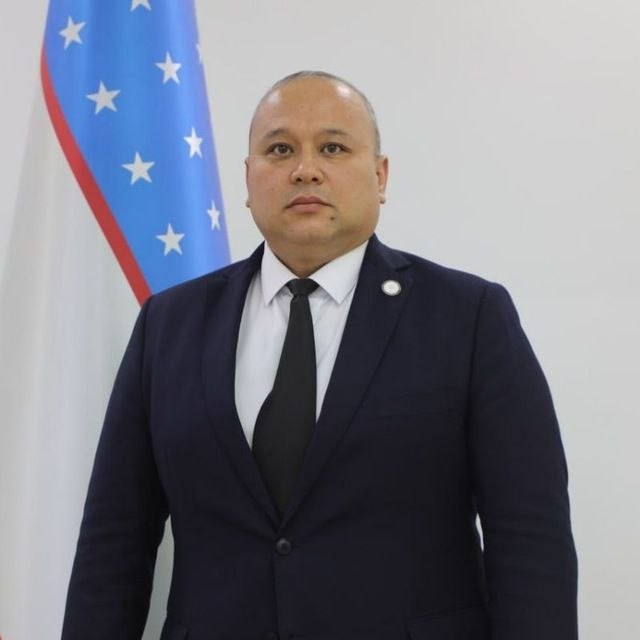
Sabirov Erkinjon Kuchkarbaevich
Department teacher
Structural division: Department of Civil and Legal Sciences
Academic degree: Doctor of Philosophy (PhD) in Law, Acting Associate Professor
Phone: (55) 501-01-88
Email: e.sabirov@sudacademy.uz
DEPARTMENT OF CIVIL LAW DISCIPLINES
The Department of Civil Law Disciplines is a structural unit of the Academy of Justice specializing in the preparation of judicial candidates and the professional development of judges and court staff in civil, family, housing, labour and civil procedural law. The Department integrates education, research and judicial practice and develops the ability to interpret legal rules, assess evidence, draft procedural documents and reasoned judgments, apply international standards, and use modern digital tools responsibly.
1. Official name and legal basis
Department of Civil Law Disciplines of the Academy of Justice of the Republic of Uzbekistan.
The Department operates as part of the Academy’s renewed system for judicial education and professional development established pursuant to Presidential Decree No. PF-141 of 21 August 2025, “On Measures to Fundamentally Improve the System for Training Highly Qualified Personnel in the Field of Justice”.
2. About the Department
The Department contributes to the preparation of highly qualified professionals for the judiciary who possess up-to-date legal knowledge and the practical skills required for judicial work. It also supports the retraining and continuing professional development of judges and court staff.
Its teaching links the theory of civil, family, housing, labour and civil procedural law with current judicial practice. Classes examine real and simulated case files, procedural documents, evidence, legal positions, domestic legislation and applicable international standards in an integrated manner.
The Department uses modern information and communication technologies, interactive teaching methods, distance-learning tools, multimedia resources, case studies, simulated hearings, structured discussion and legal-writing exercises. This approach develops independent and systematic reasoning, legal argumentation, impartial decision-making and high-quality judicial drafting.
3. Core mission
The Department’s core mission is to prepare judges, judicial candidates and court staff who possess strong theoretical knowledge, sustainable practical skills, and a firm commitment to the rule of law, fair adjudication and the effective protection of the rights and legitimate interests of individuals and organizations.
4. Principal responsibilities
1. Developing and regularly updating competency-based curricula, programmes and modules for judicial candidates, judges and court staff.
2. Delivering lectures, seminars, practical classes, training sessions and short courses in civil, family, housing, labour and civil procedural law at a high academic and methodological standard.
3. Reviewing judicial practice, identifying recurring problems in the application of law, and preparing evidence-based practical recommendations.
4. Developing skills in examining and assessing evidence, observing procedural time limits, drafting procedural documents and providing legally reasoned judgments.
5. Preparing textbooks, teaching and methodological manuals, tests, case files, practical assignments, online courses and multimedia resources.
6. Comparatively examining domestic legislation, international standards and relevant foreign practice, and incorporating suitable approaches into judicial education.
7. Expanding academic and educational cooperation with the Supreme Court, regional courts, universities, research institutions, foreign judicial schools and international organizations.
8. Promoting professional dialogue through research seminars, round tables, conferences, open lectures and masterclasses.
6. Priority areas
– the application of civil and civil procedural law;
– family, housing, labour, contractual and obligations-related disputes;
– access to court, jurisdiction, evidence and the assessment of evidence;
– judicial drafting, reasoned judgments and enforcement-related issues;
– the protection of personal rights, domestic law and international standards;
– judicial-practice review, consistency and recurring implementation problems;
– digital justice, electronic evidence, distance learning and legal technology;
– comparative law, international cooperation and modern methods of judicial education.
7. Teaching and methodological work
Within programmes for judicial candidates and the retraining and professional development of judges and court staff, the Department provides training in the following areas:
– civil law and civil procedural law;
– bringing civil claims before the courts and drafting procedural documents;
– contracts and obligations, property rights and judicial protection;
– the substantive and procedural features of family, housing and labour disputes;
– proof and the assessment of relevance, admissibility and reliability of evidence;
– personal rights: domestic legislation and international standards;
– review and analysis of judicial practice: problems and solutions;
– legal writing, judgment reasoning and professional communication.
Teaching methods include brainstorming, rapid-response questioning, structured debate, problem-based learning, case studies, simulated hearings, small-group work, expert review of judicial documents and individual legal-writing assignments.