Kafedralar
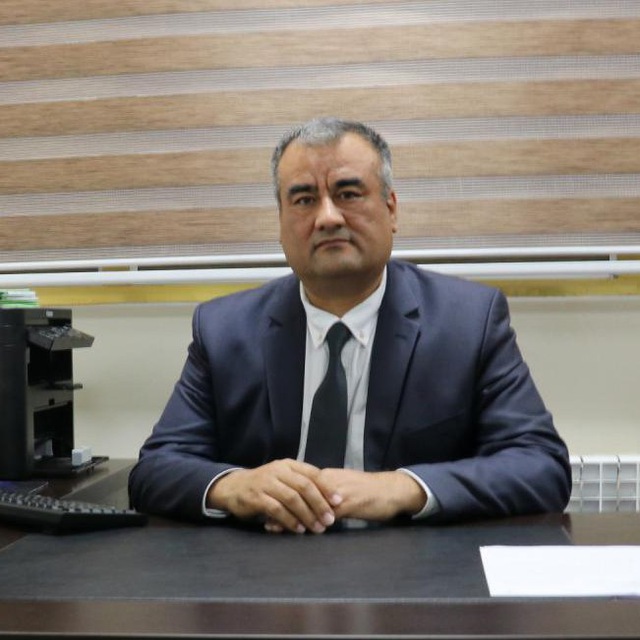
Toshev Otabek
Lecture-professor
Structural division: Department of Administrative Law Disciplines
Academic degree: Doctor of Philosophy (PhD) in Law
Phone: (55) 501-01-88
Email: o.toshev@sudacademy.uz
The Department and Its Organizational and Legal Basis:
The Department of Administrative Legal Sciences was established pursuant to Decree of the President of the Republic of Uzbekistan No. UP-141 dated August 21, 2025, “On Measures to Fundamentally Improve the System of Training Highly Qualified Personnel in the Sphere of Justice.”
In the course of its activities, the Department is governed by the Constitution and laws of the Republic of Uzbekistan, legislative acts of the Oliy Majlis of the Republic of Uzbekistan, decrees, resolutions, and orders of the President of the Republic of Uzbekistan, resolutions and orders of the Cabinet of Ministers of the Republic of Uzbekistan, as well as the Charter of the Academy and these Regulations.
The Department carries out educational-methodological and scientific-research work, as well as legal advocacy activities, on substantive and procedural legal norms and on current issues of judicial and legal reforms.
The Department conducts its activities under the leadership of the Rector of the Academy and is subordinate to him/her.
Official Name of the Structural Unit:
In the state language: Ma’muriy-huquqiy fanlar kafedrasi;
In Russian: Кафедра административно-правовых дисциплин;
In English: Department of Administrative Legal Sciences.
Tasks and Functions of the Department
The following are the main tasks of the Department:
training candidates for judicial positions, enhancing the qualifications of judges and court personnel, and retraining judges for leadership positions;
organizing professional retraining courses in the form of dual education based on the “theory–practice–simulation” principle, ensuring an inseparable link between legislative application skills and practical experience;
conducting practical sessions using the deontological method in order to develop the practical skills of attendees of professional retraining courses, thereby ensuring their direct participation in the activities of relevant administrative bodies;
introducing “virtual court” sessions in professional retraining courses, allowing for real-time observation of court proceedings and analysis of procedural actions of a judge, as well as organizing educational classes on the use of artificial intelligence technologies;
introducing interactive teaching methods into the educational process that develop skills in casework, critical analysis, and making substantiated decisions through the use of innovative pedagogical and information-communication technologies;
developing attendees’ theoretical knowledge and practical skills in jurisprudence, professional ethics, professional psychology, business communication, time management, negotiation techniques, information processing technologies, and the interpretation and application of legal norms;
regularly organizing events to discuss current issues of judicial and law enforcement activities, as well as law enforcement practice;
acquainting attendees with amendments and additions introduced into legislative acts, the status and trends of domestic and foreign law enforcement practice, as well as experience in the field of lawmaking activity;
establishing effective interagency cooperation with educational and scientific-research institutions engaged in training candidates for judicial positions and enhancing the qualifications of judges and court personnel, with the aim of exchanging experience and uniting efforts to improve the quality of the educational process;
conducting the types of sessions specified in the criminal direction within the curricula and training programs of the Academy’s educational process for training candidates for judicial positions, retraining judges and court personnel, and improving their qualifications at a high theoretical and scientific-practical level;
strengthening the scientific potential of the department, broadly involving youth in scientific activities, coordinating scientific-research and innovation activities, attracting scientific projects, and ensuring an integral connection between science and practice;
developing draft model curricula for administrative court judges, candidates for judicial office, and court system personnel;
providing reviews and expert opinions on curricula prepared by related departments of other educational institutions;
preparing textbooks, methodological, and visual aids;
preparing expert conclusions on educational manuals and educational-methodological literature submitted for publication, including literature co-authored with foreign scholars;
carrying out scientific-research work in accordance with the approved plan, discussing completed research projects, recommending them for publication, introducing their findings into law enforcement practice, and ensuring the continuity of education, science, and legal practice;
reviewing the educational, scientific-research, and legal advocacy work included in the individual work plans of the department’s professors and instructors, and organizing activities aimed at studying, synthesizing, and popularizing the best practices of experienced teachers;
introducing modern pedagogical and information-communication technologies, creating an information database, establishing the effective use of modern educational and technical equipment in classes, and organizing instruction in specialized classrooms equipped with modern computer technologies;
submitting relevant proposals on the development of distance learning elements;
participating in expert groups on drafting regulatory legal acts and ensuring the execution of state programs, other guiding documents, and assignments;
organizing events aimed at the continuous professional development and qualification enhancement of the department’s professors and instructors, and developing the educational service delivery system;
developing cooperative relations in the field of education with foreign educational institutions, and engaging foreign expert specialists in the educational process;
compiling final examination (assessment) questions, test questions, and case studies for subjects taught at the department, and integrating them into the educational process;
assisting in the continuous replenishment of the Academy’s Information Resource Center with new educational, scientific-practical, and periodic literature relevant to the department’s educational specializations and areas.